I sat in the emergency room waiting area, holding my blue plastic box of pills in my lap, along with a list of all my medications scrawled on a ripped-out page of lined notebook paper. My mom, nurse that she is, had me bring everything and write down all my dosages before we left the house.
I don’t remember the check-in process, or how long we waited. After what could have been hours or mere minutes, we were taken back to a curtained exam “room,” and I took my place on the bed, flanked by my husband and my mom in chairs. I’m sure I was seen first by a nurse, but I have no memory of it.
I do remember very clearly the exact moment the psychiatrist on call strode in. He was tall, and wore a dark, fine-gauge sweater with well-tailored trousers and smart shoes. My previous “psychiatrist” was schlumpy and unkempt. This guy was that guy’s polar opposite in far more than just the sartorial sense, as it turned out. He inspired confidence, but wasn’t arrogant or condescending as doctors can be. He seemed like someone with a low tolerance for bullshit and a huge capacity for compassion. In that instant, I just knew. He was the guy. The one who was going to clean up this mess. From several feet away, I felt my mom relax just the tiniest bit. She knew it, too.
I dutifully handed over the lengthy list of medications. I watched the doctor’s face as he scanned the list, but his face revealed nothing. He pronounced the list “impressive.” Later, once he was more familiar with me and my circumstances, he told me what he was really thinking – that he’d seen patients experience psychotic breaks on far less. He said the staff couldn’t believe the combination of medications I was taking.
I remember being annoyed because the doctor didn’t want to hear what I had to say. He tactfully, but firmly, told me he was more interested in my mom’s and husband’s observations because he was trying to establish a baseline. In retrospect, I can see why he thought I might be a less-than-reliable source of information and I appreciate that he didn’t wave the list in my face to prove the point.
He admitted me to the hospital’s “behavioral health unit.” In addition to my debilitating depression, it wasn’t safe for me to go off all those drugs cold turkey on my own. The process had to be managed in an in-patient setting.
I don’t think my mom and my husband were allowed to come up to the unit with me. I think I had to part ways with them in the emergency room, while I was transported upstairs alone. I’m honestly not sure.
The unit was dark, illuminated only by an old TV screen and a dimly-lit nurses station. I was shown the kitchen area, where I could get something to drink. There were also crackers. So many crackers. Drawers full of crackers. Grahams, saltines…all the crackers.
I was then guided to my room. It was a private room and even though it was January, it was sweltering. I later learned the temperature problem was unique to that side of the hallway. I asked about a fan, and was told no because the cord was dangerous. I could hang myself or electrocute myself. Surprisingly, I was allowed to have my phone (the nurses kept the charger and cord in a locked cabinet), which I used the next day to track down a battery-operated fan (again, it was January – no small feat) only to have that idea shot down, too. They weren’t sure what I could do to myself with a battery-operated fan, but they weren’t taking any chances. The whole thing reminded me of Officer Obie in Alice’s Restaurant. I made what I felt was a solid case that I was more likely to be done in by the heat than a fan, and that they should take my quest for climate control as a sign of my will to live, but they held firm.
My first morning in the hospital, I was awoken by the god-awful bleating of a nurse trying to cajole an elderly man in the room next to me out of bed. She sounded like fucking Edith Bunker, full of forced cheer, shrilly urging this poor man to “Stand up straight, like a sooooldjuuuurrrr.” Never in my life have I wanted to yell “Shut the FUCK up!” so bad, but I knew I needed these people and was in no position to alienate them.
The hospital was much like my formal education. I have always been an unfortunate combination of insolent and people-pleaser. A psych unit is an absurd, surreal place. I coped with it by making fun of it, but only to a point. I understood I needed to be there and wouldn’t do myself any favors by totally pissing off the staff.
I recall a moment when I knew I’d gone too far with my mini-rebellions and acerbic comments. There was another woman there, about my age, and we became friendly. This was not her first hospitalization, and she showed me the ropes, so to speak. No real ropes. No battery-operated fans, either. It seems I haven’t quite gotten over that yet. Anyway, most of us were gathered in the common room and this girl started making smart-ass comments, and I could see her looking at me for approval. That was when I pulled back and got serious. I wasn’t so self-involved that I didn’t see my influence could interfere with her progress.
When I wasn’t sleeping or trying to convince the nurses to let me sleep, I mostly hung out in the unit’s common area. Windows lined the full length of the back wall, but it still felt dark and dingy. The shelves held old books and stacks of donated board games and puzzles with worn, tattered boxes. The whole room smelled old.
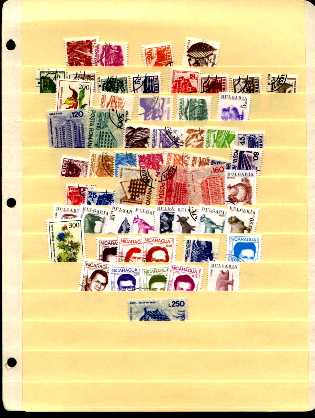
I often sat in a coveted recliner in a corner, sorting old postage stamps out of a gallon Ziploc bag. I concentrated on putting them into stock pages categorized by subject and geography. Sorting stamps is done with tongs, like these, and my request to use them caused much consternation among the staff. There was a lengthy discussion about whether and how I could use them to harm myself or someone else. Eventually, they acquiesced and I was allowed to sort to my heart’s content. It was a very therapeutic diversion.
There was a TV in the center of the room that was almost always tuned to the news. That’s how I knew when Heath Ledger died. I tend not to romanticize celebrity deaths, but Heath Ledger’s death distressed me because it forced on me an awareness that I could have died from all those prescription drugs. There was a bright spot; I wasn’t addicted to any of them. There was one pill I sort of missed. I later saw a prescription bottle full of them sitting on an elderly relative’s table and thought, “Oh man…I sure do miss those,” but I wasn’t tempted to take any. So in that regard, I was very lucky.
We were allowed daily visiting hours. My husband came every day. After I was deemed not a suicide risk, I was permitted to leave the unit and go outside with him. Once, he pulled the car up close to the building. Our cocker spaniel, Jake, was waiting inside. I climbed into the back seat, and blissfully held and petted my sweet, sweet dog until I had to return to confinement.
One of the strangest dynamics of psych hospital life was how desperately we awaited our doctors’ daily rounds. Some of the patients would go up to the nurses station and badger them about when the doctor would arrive. If it got late in the evening, panic ensued. Is the doctor coming? What if he’s not coming? Are you sure he’s coming? Oh, my God, he’s not coming. I was looked upon with envy because of who my doctor was. Everyone wanted my doctor. He was the rock star of the psychiatrists. I’d done nothing other than walk into the emergency department at the right day and time, but being one of his patients was akin to sitting at the cool kids’ table in middle school. It was a little creepy, if we’re being honest.
I spent a week in the hospital. I was in a huge hurry to be “fixed” and get the hell out of there and on with my life. I was ashamed by the whole ugly ordeal and just wanted to put my life back together and pretend all of this had never happened. That had always been my M.O. – acting like nothing was wrong. It hadn’t yet dawned on me that perhaps that approach contributed heavily to the circumstances in which I found myself.
I pleaded with my doctor to let me go home. He relented, but not without an admonishment: “You’ll be back.”
Yeah, yeah. I’m good. I’ll see you at my follow-up appointments on the outside.
I went back home. Nothing had changed. I was still jobless. My husband still didn’t know what the hell to do with me. I was still depressed. I’ve heard depression described dozens of ways. I think it’s different for everyone. For me, I’d say it was similar to the muscular symptoms of the flu, when you’re fatigued all the way down deep into your bones and you can barely move. I rarely got out of bed, slipping in and out of consciousness all day and all night. I had no regular pattern or routine.
I remember trying to walk half a block to the corner and back to my house once. It felt like I was walking through thick, dense sand up to my neck. By the time I made it back to my house, my lower back burned because those muscles hadn’t been used. It hurt to try and raise my arms over my head to shampoo my hair. I have a vivid memory of sobbing in the bath because my arms weren’t strong enough to lift me out of the tub.
I went to visit my great aunt in Texas a couple of weeks after I got out of the hospital. Some day I will devote a post just to her. She is something else. She is a healing force. Being at her house was a balm on my raw, broken soul. No one expected anything of me. I just had to be. There was enough structure for me to sort of function – I had to get up, get dressed, come to the table for meals, and be sociable. The first day I was there, I was called to the table at 3:30 for a meal. I had no idea what meal we were eating. Second lunch? Was I staying with Hobbits? This couldn’t possibly be dinner, could it? But it was dinner. And everyone was in bed by 8:00. It was heaven. I just had to make it to 8:00, when it was socially acceptable to crawl in bed. That hour between 7:00 and 8:00 was brutal, but I pulled it off. I spent the days listening to family stories I’d never heard before and looking at old family photos. We went shopping. I even went to a Red Hat Society luncheon. She never made me feel judged or even a little bit defective.
My best friend from childhood lived between my aunt’s home and the airport, so I stayed with her for a night. There is no friend like a friend who has been with you through everything. I didn’t have to explain anything. I played dress up with her little girl. It was taco night. We stayed up too late talking, especially since she was super pregnant and really needed to rest. The next morning, I watched her fix her daughter’s hair for school, reminded that we weren’t much older than her daughter when we met, and I felt profoundly grateful for this enduring friendship.
The trip was just a Band-Aid, though. When I got home, my problems were waiting for me. The reality of my employment situation, coupled with feeling absolutely powerless, caused me to despair even further. Within a very short time, I was suicidal. I didn’t want to commit the actual act of killing myself. I wanted to disappear into darkness, and emerge when everything was better. (As a side note, the cryogenics people should really figure out something for depressed people. I’m pretty sure there’s a market there.) I wanted to rejoin the world…eventually. When I didn’t hurt so much. When I could walk to the end of my street and back without having to stop and rest on a neighbor’s step. I was utterly bereft of hope. I couldn’t see a way out of the wretchedness.
So, as it turned out, my psychiatrist was right. I went back to the hospital.
The second time was both better and worse. This time, I was a veteran. I knew to ask for a room on the other side of the hall. I was better behaved. I still refused to get out of bed for group. I fucking hated group therapy. But I threw myself into art therapy. I can’t draw or paint for shit, but they had magazines and I liked collaging. Of course, I wasn’t allowed to get any scissors (even though they were safety scissors) out of the locked art supply cabinet and had to wait for times when the art therapist could monitor me, but that was tolerable. I didn’t function well in the group therapy setting, but art therapy was different. I was able to encourage my peers and give of myself in art therapy in a way I really couldn’t the rest of the time.
The difference between the second hospital stay and the first was this: The second stay was all about actively choosing to live. That included a decision to take a drug called Depakote to help stabilize my moods. A notorious side effect of Depakote is substantial weight gain. I’d struggled with my weight since college, and the tonnage of amphetamines I’d been taking kept my weight artificially low. Going off the amphetamines, combined with the sedentary life of depression, meant that I’d already experienced a stunning weight gain. My doctor sat me down before he prescribed Depakote. He was concerned that I was, as he put it, “The ‘Oh, fuck it,’ type.” He wasn’t worried that I’d make a plan to commit suicide and methodically carry out that plan. He was worried I’d get pissed off, be impulsive, say “Oh, fuck it,” and kill myself. I saw myself in what he was saying. It was a significant insight, really. He felt I needed to be on mood stabilizing medication to prevent an “Oh, fuck it” scenario. We had a very candid conversation in which I had to choose whether I wanted to die or be overweight. I’m still here and I’m still overweight. I’m not sorry for that choice, although I can’t say I’ve at all resigned myself to a lifetime of fat. But that, my friends, is another post.
During that second stay, three of my friends came to see me. One came by herself, and two came together. Both visits were awkward and uncomfortable as all hell, but they came. They know who they are, and I hope they know I have never, ever forgotten and never will. The one who came by herself brought a plant in a cachepot. That cachepot sits next to the sink in my kitchen, a handy vessel for sponges and sink stoppers, and a constant reminder of abiding friendship. A group of former colleagues sent me flowers, which touched and bewildered me. In my drug-induced dysfunction, I’d made their professional lives so much harder. I was awed that they still cared about me and wanted to be my friends.
While I recovered, people in my life showed up. They worried about me. They forgave me. They pushed me. They gave me grace.
My mom called me every single day at noon. Every day, without fail. She lives on the West Coast, and now that I am a mother myself, I have an inkling of how terrifying it must have been for her and how powerless she must have felt from a continent away.
I recently had the opportunity to see Cheryl Strayed, one of my literary idols, give a talk. Something she said resonated with me so deeply that I whipped out my phone and typed it to myself. In talking about her own struggles, she said “I was young enough to think I’d actually ruined my life…and then I remembered how much my mother had loved me…I was her destiny and I couldn’t waste it…There is always glimmer in the dark place…and my glimmer was my mother’s love.”
I, too, was young enough to think I’d actually ruined my life. My mother’s love was a glimmer in the dark place. And then there was my husband. His love was less glimmer and more glaring spotlight. My mom gave me assignments and had expectations, but she was gentle with me. My husband held my feet to the fire. They both knew I needed accountability, but they approached it very differently.
Together, they saved me until I could save myself.
It was a long, slow recovery. I can’t pinpoint the exact moment when I became “well,” but it did happen. My mom and my husband wouldn’t let me get away with sleeping all day. My husband expected to see “proof of life.” I developed a habit of watching HGTV all day. In the late afternoon, when the show came on where people stay overnight in a house in order to decide if they want to buy it, I would make myself get up and start all the appliances in the house so they would be running when he got home. That way, it would look like I’d been busy and productive instead of laying on the sofa yelling “You can change the paint, you idiot!” at House Hunters.
A few months after my second hospital stay, I began working part-time. First it was ten hours a week, then 15, then 20, then full-time.
Almost exactly four years after my hospital admissions, I was admitted to the same hospital for the birth of my son. That was, in so many ways, a triumph. I have avoided another depressive episode since. I am frequently asked by people familiar with my history whether I experienced post-partum depression; I didn’t.
This is a story without an ending, thank God. I don’t know how it will turn out. I guard my mental health closely. I have an obligation to my family and friends – my son, most especially – to stay well.
I resist the temptation to get mired down in regret. Objectively speaking, my life is so much better now than it was before that pivotal dinner with my college friend’s (now ex) wife. I know what my marriage can withstand. I am anchored by the security that comes from receiving tremendous love from many people. I am both softer and tougher.
I am not sorry. I am grateful.

 Row 20