A Square Peg in a Black Hole, Part 2

I sat in the emergency room waiting area, holding my blue plastic box of pills in my lap, along with a list of all my medications scrawled on a ripped-out page of lined notebook paper. My mom, nurse that she is, had me bring everything and write down all my dosages before we left the house.

I don’t remember the check-in process, or how long we waited. After what could have been hours or mere minutes, we were taken back to a curtained exam “room,” and I took my place on the bed, flanked by my husband and my mom in chairs. I’m sure I was seen first by a nurse, but I have no memory of it.

I do remember very clearly the exact moment the psychiatrist on call strode in. He was tall, and wore a dark, fine-gauge sweater with well-tailored trousers and smart shoes. My previous “psychiatrist” was schlumpy and unkempt. This guy was that guy’s polar opposite in far more than just the sartorial sense, as it turned out. He inspired confidence, but wasn’t arrogant or condescending as doctors can be. He seemed like someone with a low tolerance for bullshit and a huge capacity for compassion. In that instant, I just knew. He was the guy. The one who was going to clean up this mess. From several feet away, I felt my mom relax just the tiniest bit. She knew it, too.

I dutifully handed over the lengthy list of medications. I watched the doctor’s face as he scanned the list, but his face revealed nothing. He pronounced the list “impressive.” Later, once he was more familiar with me and my circumstances, he told me what he was really thinking – that he’d seen patients experience psychotic breaks on far less. He said the staff couldn’t believe the combination of medications I was taking.

I remember being annoyed because the doctor didn’t want to hear what I had to say. He tactfully, but firmly, told me he was more interested in my mom’s and husband’s observations because he was trying to establish a baseline. In retrospect, I can see why he thought I might be a less-than-reliable source of information and I appreciate that he didn’t wave the list in my face to prove the point.

He admitted me to the hospital’s “behavioral health unit.” In addition to my debilitating depression, it wasn’t safe for me to go off all those drugs cold turkey on my own. The process had to be managed in an in-patient setting.

I don’t think my mom and my husband were allowed to come up to the unit with me. I think I had to part ways with them in the emergency room, while I was transported upstairs alone. I’m honestly not sure.

The unit was dark, illuminated only by an old TV screen and a dimly-lit nurses station. I was shown the kitchen area, where I could get something to drink. There were also crackers. So many crackers. Drawers full of crackers. Grahams, saltines…all the crackers.

I was then guided to my room. It was a private room and even though it was January, it was sweltering. I later learned the temperature problem was unique to that side of the hallway. I asked about a fan, and was told no because the cord was dangerous. I could hang myself or electrocute myself. Surprisingly, I was allowed to have my phone (the nurses kept the charger and cord in a locked cabinet), which I used the next day to track down a battery-operated fan (again, it was January – no small feat) only to have that idea shot down, too. They weren’t sure what I could do to myself with a battery-operated fan, but they weren’t taking any chances. The whole thing reminded me of Officer Obie in Alice’s Restaurant. I made what I felt was a solid case that I was more likely to be done in by the heat than a fan, and that they should take my quest for climate control as a sign of my will to live, but they held firm.

My first morning in the hospital, I was awoken by the god-awful bleating of a nurse trying to cajole an elderly man in the room next to me out of bed. She sounded like fucking Edith Bunker, full of forced cheer, shrilly urging this poor man to “Stand up straight, like a sooooldjuuuurrrr.” Never in my life have I wanted to yell “Shut the FUCK up!” so bad, but I knew I needed these people and was in no position to alienate them.

The hospital was much like my formal education. I have always been an unfortunate combination of insolent and people-pleaser. A psych unit is an absurd, surreal place. I coped with it by making fun of it, but only to a point. I understood I needed to be there and wouldn’t do myself any favors by totally pissing off the staff.

I recall a moment when I knew I’d gone too far with my mini-rebellions and acerbic comments. There was another woman there, about my age, and we became friendly. This was not her first hospitalization, and she showed me the ropes, so to speak. No real ropes. No battery-operated fans, either. It seems I haven’t quite gotten over that yet. Anyway, most of us were gathered in the common room and this girl started making smart-ass comments, and I could see her looking at me for approval. That was when I pulled back and got serious. I wasn’t so self-involved that I didn’t see my influence could interfere with her progress.

When I wasn’t sleeping or trying to convince the nurses to let me sleep, I mostly hung out in the unit’s common area. Windows lined the full length of the back wall, but it still felt dark and dingy. The shelves held old books and stacks of donated board games and puzzles with worn, tattered boxes. The whole room smelled old.

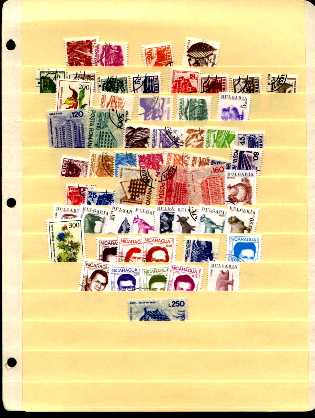
I often sat in a coveted recliner in a corner, sorting old postage stamps out of a gallon Ziploc bag. I concentrated on putting them into stock pages categorized by subject and geography. Sorting stamps is done with tongs, like these, and my request to use them caused much consternation among the staff. There was a lengthy discussion about whether and how I could use them to harm myself or someone else. Eventually, they acquiesced and I was allowed to sort to my heart’s content. It was a very therapeutic diversion.

There was a TV in the center of the room that was almost always tuned to the news. That’s how I knew when Heath Ledger died. I tend not to romanticize celebrity deaths, but Heath Ledger’s death distressed me because it forced on me an awareness that I could have died from all those prescription drugs. There was a bright spot; I wasn’t addicted to any of them. There was one pill I sort of missed. I later saw a prescription bottle full of them sitting on an elderly relative’s table and thought, “Oh man…I sure do miss those,” but I wasn’t tempted to take any. So in that regard, I was very lucky.

We were allowed daily visiting hours. My husband came every day. After I was deemed not a suicide risk, I was permitted to leave the unit and go outside with him. Once, he pulled the car up close to the building. Our cocker spaniel, Jake, was waiting inside. I climbed into the back seat, and blissfully held and petted my sweet, sweet dog until I had to return to confinement.

One of the strangest dynamics of psych hospital life was how desperately we awaited our doctors’ daily rounds. Some of the patients would go up to the nurses station and badger them about when the doctor would arrive. If it got late in the evening, panic ensued. Is the doctor coming? What if he’s not coming? Are you sure he’s coming? Oh, my God, he’s not coming. I was looked upon with envy because of who my doctor was. Everyone wanted my doctor. He was the rock star of the psychiatrists. I’d done nothing other than walk into the emergency department at the right day and time, but being one of his patients was akin to sitting at the cool kids’ table in middle school. It was a little creepy, if we’re being honest.

I spent a week in the hospital. I was in a huge hurry to be “fixed” and get the hell out of there and on with my life. I was ashamed by the whole ugly ordeal and just wanted to put my life back together and pretend all of this had never happened. That had always been my M.O. – acting like nothing was wrong. It hadn’t yet dawned on me that perhaps that approach contributed heavily to the circumstances in which I found myself.

I pleaded with my doctor to let me go home. He relented, but not without an admonishment: “You’ll be back.”

Yeah, yeah. I’m good. I’ll see you at my follow-up appointments on the outside.

I went back home. Nothing had changed. I was still jobless. My husband still didn’t know what the hell to do with me. I was still depressed. I’ve heard depression described dozens of ways. I think it’s different for everyone. For me, I’d say it was similar to the muscular symptoms of the flu, when you’re fatigued all the way down deep into your bones and you can barely move. I rarely got out of bed, slipping in and out of consciousness all day and all night. I had no regular pattern or routine.

I remember trying to walk half a block to the corner and back to my house once. It felt like I was walking through thick, dense sand up to my neck. By the time I made it back to my house, my lower back burned because those muscles hadn’t been used. It hurt to try and raise my arms over my head to shampoo my hair. I have a vivid memory of sobbing in the bath because my arms weren’t strong enough to lift me out of the tub.

I went to visit my great aunt in Texas a couple of weeks after I got out of the hospital. Some day I will devote a post just to her. She is something else. She is a healing force. Being at her house was a balm on my raw, broken soul. No one expected anything of me. I just had to be. There was enough structure for me to sort of function – I had to get up, get dressed, come to the table for meals, and be sociable. The first day I was there, I was called to the table at 3:30 for a meal. I had no idea what meal we were eating. Second lunch? Was I staying with Hobbits? This couldn’t possibly be dinner, could it? But it was dinner. And everyone was in bed by 8:00. It was heaven. I just had to make it to 8:00, when it was socially acceptable to crawl in bed. That hour between 7:00 and 8:00 was brutal, but I pulled it off. I spent the days listening to family stories I’d never heard before and looking at old family photos. We went shopping. I even went to a Red Hat Society luncheon. She never made me feel judged or even a little bit defective.

My best friend from childhood lived between my aunt’s home and the airport, so I stayed with her for a night. There is no friend like a friend who has been with you through everything. I didn’t have to explain anything. I played dress up with her little girl. It was taco night. We stayed up too late talking, especially since she was super pregnant and really needed to rest. The next morning, I watched her fix her daughter’s hair for school, reminded that we weren’t much older than her daughter when we met, and I felt profoundly grateful for this enduring friendship.

The trip was just a Band-Aid, though. When I got home, my problems were waiting for me. The reality of my employment situation, coupled with feeling absolutely powerless, caused me to despair even further. Within a very short time, I was suicidal. I didn’t want to commit the actual act of killing myself. I wanted to disappear into darkness, and emerge when everything was better. (As a side note, the cryogenics people should really figure out something for depressed people. I’m pretty sure there’s a market there.) I wanted to rejoin the world…eventually. When I didn’t hurt so much. When I could walk to the end of my street and back without having to stop and rest on a neighbor’s step. I was utterly bereft of hope. I couldn’t see a way out of the wretchedness.

So, as it turned out, my psychiatrist was right. I went back to the hospital.

The second time was both better and worse. This time, I was a veteran. I knew to ask for a room on the other side of the hall. I was better behaved. I still refused to get out of bed for group. I fucking hated group therapy. But I threw myself into art therapy. I can’t draw or paint for shit, but they had magazines and I liked collaging. Of course, I wasn’t allowed to get any scissors (even though they were safety scissors) out of the locked art supply cabinet and had to wait for times when the art therapist could monitor me, but that was tolerable. I didn’t function well in the group therapy setting, but art therapy was different. I was able to encourage my peers and give of myself in art therapy in a way I really couldn’t the rest of the time.

The difference between the second hospital stay and the first was this: The second stay was all about actively choosing to live. That included a decision to take a drug called Depakote to help stabilize my moods. A notorious side effect of Depakote is substantial weight gain. I’d struggled with my weight since college, and the tonnage of amphetamines I’d been taking kept my weight artificially low. Going off the amphetamines, combined with the sedentary life of depression, meant that I’d already experienced a stunning weight gain. My doctor sat me down before he prescribed Depakote. He was concerned that I was, as he put it, “The ‘Oh, fuck it,’ type.” He wasn’t worried that I’d make a plan to commit suicide and methodically carry out that plan. He was worried I’d get pissed off, be impulsive, say “Oh, fuck it,” and kill myself. I saw myself in what he was saying. It was a significant insight, really. He felt I needed to be on mood stabilizing medication to prevent an “Oh, fuck it” scenario. We had a very candid conversation in which I had to choose whether I wanted to die or be overweight. I’m still here and I’m still overweight. I’m not sorry for that choice, although I can’t say I’ve at all resigned myself to a lifetime of fat. But that, my friends, is another post.

During that second stay, three of my friends came to see me. One came by herself, and two came together. Both visits were awkward and uncomfortable as all hell, but they came. They know who they are, and I hope they know I have never, ever forgotten and never will. The one who came by herself brought a plant in a cachepot. That cachepot sits next to the sink in my kitchen, a handy vessel for sponges and sink stoppers, and a constant reminder of abiding friendship. A group of former colleagues sent me flowers, which touched and bewildered me. In my drug-induced dysfunction, I’d made their professional lives so much harder. I was awed that they still cared about me and wanted to be my friends.

While I recovered, people in my life showed up. They worried about me. They forgave me. They pushed me. They gave me grace.

My mom called me every single day at noon. Every day, without fail. She lives on the West Coast, and now that I am a mother myself, I have an inkling of how terrifying it must have been for her and how powerless she must have felt from a continent away.

I recently had the opportunity to see Cheryl Strayed, one of my literary idols, give a talk. Something she said resonated with me so deeply that I whipped out my phone and typed it to myself. In talking about her own struggles, she said “I was young enough to think I’d actually ruined my life…and then I remembered how much my mother had loved me…I was her destiny and I couldn’t waste it…There is always glimmer in the dark place…and my glimmer was my mother’s love.”

I, too, was young enough to think I’d actually ruined my life. My mother’s love was a glimmer in the dark place. And then there was my husband. His love was less glimmer and more glaring spotlight. My mom gave me assignments and had expectations, but she was gentle with me. My husband held my feet to the fire. They both knew I needed accountability, but they approached it very differently.

Together, they saved me until I could save myself.

It was a long, slow recovery. I can’t pinpoint the exact moment when I became “well,” but it did happen. My mom and my husband wouldn’t let me get away with sleeping all day. My husband expected to see “proof of life.” I developed a habit of watching HGTV all day. In the late afternoon, when the show came on where people stay overnight in a house in order to decide if they want to buy it, I would make myself get up and start all the appliances in the house so they would be running when he got home. That way, it would look like I’d been busy and productive instead of laying on the sofa yelling “You can change the paint, you idiot!” at House Hunters.

A few months after my second hospital stay, I began working part-time. First it was ten hours a week, then 15, then 20, then full-time.

Almost exactly four years after my hospital admissions, I was admitted to the same hospital for the birth of my son. That was, in so many ways, a triumph. I have avoided another depressive episode since. I am frequently asked by people familiar with my history whether I experienced post-partum depression; I didn’t.

This is a story without an ending, thank God. I don’t know how it will turn out. I guard my mental health closely. I have an obligation to my family and friends – my son, most especially – to stay well.

I resist the temptation to get mired down in regret. Objectively speaking, my life is so much better now than it was before that pivotal dinner with my college friend’s (now ex) wife. I know what my marriage can withstand. I am anchored by the security that comes from receiving tremendous love from many people. I am both softer and tougher.

I am not sorry. I am grateful.

International Incidents

A few years ago for our anniversary, my husband and I went to Munich, Prague and Budapest. Munich and Prague were relatively uneventful, except that I accidentally spent $75 for three bottles of OPI nail polish, which is readily available here in the United States and retails for about $8 per bottle. Pro tip: If you can’t do enough math in your head to convert the Czech koruna to the American dollar, the conversion app is your friend. As is the calculator. Or maybe you don’t really need the nail polish. But I digress.

We almost made it out of the Czech Republic without further mishap. Almost. We were taking a train from Prague to Budapest, and decided to stock up on provisions at the train station because we weren’t sure what the food situation would be on the train. I went to a shop while my husband waited with our (considerable) luggage some distance away. This was pre-motherhood, when vanity still trumped efficiency and I (over) packed for every possible contingency.

I took my items up to the check-out counter, and the man behind the register rang me up. I handed him my credit card, and he started shaking his head and saying something to me in Czech. I had no idea what he was trying to tell me, but whatever it was, he felt strongly about it. At this point, my husband was waving at me and motioning that we needed to go or we were going to miss our train. I gave him a signal that I hoped meant “Hang on a second, I’m trying to avert an international incident.”

After much gesticulating on both of our parts, I put it together that the man’s credit card machine was not working. So I started to put the food back. I had no interest in going to an ATM and withdrawing more Czech money, because I was going to be in the Czech Republic for another fifteen minutes, max. All I wanted to do was put the items back and be on my way.

My husband didn’t quite know what was going on, but he could see I was in a bit of a jam. Unfortunately, he was encumbered by a multitude of suitcases holding every piece of winter apparel I own, not to mention the toiletries, shoes, guidebooks and souvenirs.

He looked around and did what any rational person would do when one’s wife is being held against her will by an angry merchant in a Czech train station…he started hollering for the police. In Spanish. “Policia! Policia!” he yelled. Note: the word for police in Czech is “Policie.” File that away. You might need it someday.

He needn’t have hollered, because that shopkeeper was way ahead of him. The police were already en route to deal with me. The police arrived. Fortunately, they spoke English. They explained to me that the man rang up the sale, his credit card machine was not working, and his register wouldn’t allow him to cancel the sale. I tried calmly explaining to the police that I just wanted to put the items back on the shelf, get on the train, and get out of their country. I expected that last part to appeal to them enough to advocate for me with the angry shopkeeper, but it did not. They suggested I go to the ATM. I explained I had no need of more Czech korunas. And, if we’re being honest, even if that had not been the case, I wouldn’t have given this shopkeeper my money for anything in the world. As my three-year-old would say, he was not nice.

I continued to emphasize the point to the policemen that I was not trying to steal. This was not a criminal situation. It wasn’t my fault that his credit card machine was broken, nor was it my responsibility that his register wouldn’t allow him to void a sale. After what felt like an eternity, but was probably more like five minutes, the police acquiesced to my logic and let me go. I thanked them politely and got the hell out of there before anyone changed their minds.

Without a minute to spare, we boarded the train to Hungary, hungry and with no food. We’d been right about the food options on board – pickings were slim and overpriced, and credit cards were not accepted. We emptied every pocket between us. I hunted through my purse. We came up with about 10 Euros, and my husband went forth to forage. He returned with our paltry rations, and all was well. By then, we were just grateful not to be in custody.

The train was a sleeper train. This was, of course, my idea. I’d read Murder on the Orient Express and expected it to be like that minus, you know, the murder part.

The reality was this:

Train

(This isn’t my photo. It’s one I found on Google, but it’s almost exactly the same as our bunks.)

I climbed up to upper bunk to check things out, and then proceeded to climb back down instead of using the ladder because…me. On my way down, I got my rib cage stuck on the blue bar you see in the photos. My legs dangling in his face, my husband – unaware of my predicament – started trying to help by pulling on my feet, which caused the bar to dig deeper up under my rib cage. I was in excruciating pain, but also completely helpless with silent laughter. Clueless, my husband continued to pull on my legs, driving the bar ever further into my person. Making matters worse, he picked this moment in our marriage to try using words of encouragement.

So there I was, tears of pain and laughter streaming down my face, legs swinging wildly, gasping for breath, while he loudly cheered “Keep coming! Keep coming! Come on honey! You can do it! Keep coming!” And I was rendered even more helpless with laughter and the fervent hope that no one on the other side of our door spoke English well enough to…well, you know.

I did eventually make it down from the top bunk without serious bodily injury, and I used the ladder for all subsequent trips up and down from the bunk. We arrived in Budapest without further incident.

And with that, I wish you a very happy Thanksgiving and leave you with a parting thought: The key to surviving this life is being able to see the absurdity in any situation. That, and knowing what language to use when calling for police.

P.S. – This was also the trip during which my husband took a 10-hour bus tour of Bavarian castles with me. That is love.

Of Walks and Walks-Through

This time of year, more than any other, brings a certain sameness.

My husband works in politics, and as each election cycle reaches its frenetic conclusion, I brace myself for what’s coming. Every year, there is a very predictable pattern. In the months leading up to the Tuesday following the first Monday in November, he is going full-throttle. It’s hard to describe political life to those who don’t live it, but I think the most relatable comparison I’ve come up with is that it’s akin to tax season for an accountant, but with a lot more swear words. The week after the election is consumed with wrap-up work. That is followed by an all-too-brief period in which he sort of crashes.

Then, one day, he wakes up and looks around, suddenly realizing he has an abundance of free time on his hands. Organizing is like oxygen to him. He can’t breathe without it. So he starts looking around the house to see what needs to be done. Light bulbs get changed. Little repairs get made. All of this sounds great, right? No. It’s awful. It’s awful because I know what’s next…large-scale organization of the house and its occupants. He sends me emails and texts about doing what he calls a “walk-through” of the house. It is exactly what it sounds like. We walk through the house from top to bottom (damn you, finished basement and loft space), and review “what needs done.” Never does my husband’s total lack of acquaintance with the infinitive “to be” aggravate me more than in the month of November.

I am a stacker. A piler of papers. I make little hills of stuff I need to put away…eventually. This habit of mine drives my husband bat-shit crazy. During the height of the election cycle, I’m exhausted from working full-time and essentially flying solo with the human child and the unruly fur-children, but at least no one is asking me “What’s the deal with this stuff on top of the dresser?” Or on the table, on The Thing, in the entry, etc. By mid-November, he’s not only asking me what the deal is, but he expects me to actually do something about it and he’s really kind of a nag about the whole thing. In my head – and sometimes not so much in my head as out of my mouth – I’m like, “Oh, my God, leave me the hell alone!” I will do almost anything to avoid a walk-through. I put him off with various excuses, but resistance is futile. He is nothing if not tenacious.

This period of time coincides with open enrollment at my work. I will confess to lingering on the “Legal Services” option, wondering if this is the year the walk-through finally drives me to seek legal counsel in the form of a divorce attorney.

But just when I think I can’t take any more, the phase passes. And when it’s over, I survey the house. I will admit this to you, but never, ever to him: it really does look better. We’ve identified repairs and projects that need to be done in the coming year. I hate it while it’s happening, but shit gets done.

He then moves on to the next phase, which is comprised entirely of movies. He spends pretty much the whole month of December at the movie theater. After we had our son and formed some fledgling friendships with other parents we met through daycare, I received a few carefully-worded messages from people concerned that perhaps something had happened with my husband’s job, because they noticed on Facebook he was checking into the local movie theater during the daytime with considerable frequency. I always breathe a tiny sigh of relief when the movie phase starts, because it means the end of the walk-through phase is near.

The other thing that happens this time of year is our wedding anniversary. At first, it seemed really stupid that we scheduled our wedding for three weeks after Election Day. Now, I kind of like it. By the time our anniversary rolls around, the dust has settled enough for me to take stock of the situation, and feel good that we made it through another cycle and another year.

Our first trip to Europe was an anniversary trip. London, Paris, Barcelona, Andorra. I had visions of us strolling hand-in-hand through historic avenues, gazing upward and taking in the wonder of the architecture of the Old World. I was genuinely bewildered when that wasn’t at all what happened.

Things came to a head on our first day in Barcelona. We set out on foot on the cobblestone streets. I was giddy. He was confused.

Husband: “What are we doing?”
Me: “We’re walking.”
Husband: “Right, but what are we doing?”
Me: “We’re walking.”
Husband: “But why?”
Me: “What do you mean, why?”
Husband: “Where are we going? What is our destination?”
Me: “I don’t have a specific destination.”
Husband: “What is the point of walking without a destination?”
Me. “…”

In this moment, the fundamental difference between the two of us hit me like a ton of bricks. It seems I’d completely forgotten who my traveling companion actually was: “It’s not a meeting without an agenda.” “Some is not a number, soon is not a time.” This man does not meander. We may have been in a different setting, but we were still the same people.

We’d bickered our way through two of the world’s great cities already. Neither of us wanted to bicker our way through Barcelona as well. So we took it as an opportunity to learn an important lesson in managing expectations. The next day, we agreed he would stay at the hotel and do whatever he felt like doing while I went out and wandered to my heart’s content. Fortunately, I am happy in my own company and have no qualms about going out on my own. I had a lovely little excursion. In the afternoon, at the agreed-upon time, we met at a museum we both wanted to visit.  On that trip, the lesson learned was the importance of accepting differences as just that – differences, not faults or flaws – and to find common ground.

I’ve applied that lesson many, many times in the years since that trip, in a multitude of situations, in almost all of my close relationships.

We have to know when to recognize and honor our differences – as in the case of Barcelona – and when to challenge them – as in the case of the walk-through. I hate the walk-through, but that side of my husband’s personality challenges my tendency toward complacency. It’s uncomfortable and I chafe every damn time, but it’s good for me, just as it’s good for each of us to walk our own path a bit before coming back together.

Note: There was much discussion and back-and-forthing about pluralizing “walk-through.” “Walk-throughs” sounds better in my head than “walks-through” but I finally had to concede that the “mothers-in-law” and “attorneys general” rule applied here. Stupid grammar.

Every Mistake, We Must Surely Be Learning

So many things happen when you have a baby. At the top of the list is finding a place to put the baby. In our case, this meant converting our tiny upstairs guest room into a tiny nursery, and my “craft room” into a play area. I am like a goldfish. I will take up as much space as is allotted me. Since most of our guests used the basement guest room, I’d gotten used to having both of those rooms to myself. I also have a difficult time parting with things. When it came time to clean out those rooms in order to have habitable space for a baby, it did not go well. It was very dramatic. There were tears. It’s possible some things were tossed out the second-story craft room window.

I was beyond excited about the prospect of motherhood. It was something I had hoped for madly but wasn’t sure would ever happen. It wasn’t that. But I was pissed that I was the one who was making all the room for the baby, both internally and externally. The baby was taking over my body and my space. My husband gave up one shelf for a few of my books.

In the aftermath, we had purged enough junk – seriously, it looked like a Michael’s craft store vomited in our alley – that the two rooms were empty and what was left of my stuff was crammed into a quirky piece of antique furniture known since my childhood as “The Thing” because no one has a clue as to its intended purpose.

For three years, I shoved my papers, office and craft supplies, books, etc. into The Thing. It was my own real-life Tetris game, trying to creatively stack and arrange bits and pieces to keep them contained, and I was losing.

One day, my husband had the audacity and, frankly, poor judgment to criticize the overflow. I…lost…my…shit. Lost it. I started ranting about how he and our son had entire rooms to themselves, and I had been relegated to one piece of furniture in one corner of one room. He shrugged and replied, “Okay, well, why don’t we convert the storage loft to a space for you?”

Fuck you and your calm logic, guy. But also, thank you. Yes, please, I would love to go to the Container Store and IKEA this weekend. I set about making a refuge for myself in the loft above our bedroom. One would think I learned from this incident that it’s a good thing to give people a heads-up if you have needs that are going unmet. I did not. I tend to learn lessons the hard way, and this was no exception.

Fast forward a few months, and I had a similar meltdown – this one via email – because I was feeling hugely resentful about not having any time or activities of my own. I was righteous in my indignation. Most email responses from my husband are literally one word. Some day I will write a post dedicated to all the ways I’ve used his tendency to simply reply “Ok” to my advantage. I don’t know what happened on this particular day, though, but my normally laconic husband let loose. He said if I wasn’t happy or pursuing personal enrichment, it was on me for not speaking up and I had no one to blame but myself.

That was not an entirely accurate statement. My husband is a true co-parent, but he has a demanding job and an insane travel schedule. Like most moms, my free time tends to be limited to that tiny little sliver between my son’s bedtime and my own. But my husband had thrown down the gauntlet (in writing, no less), so I was determined to take advantage of it.

I signed up for a beginning yoga class. Yoga and I were not a good match. I know that’s a blasphemous statement in today’s society. Most people find yoga calming and centering. My experience was the opposite. In fact, I had a harrowing vision in shavasana that scared the hell out of me. I recounted it to someone who works in the mental health field, and she said, “You know, maybe you’re someone who should not be left too much alone in your own head with your own thoughts.” Yep. That.

The other thing I wanted to do was learn to play the guitar. I’d thought about it for years. My dad played, and some of my best memories are of him and his guitar. I never hear “While My Guitar Gently Weeps” without remembering how it felt to sit next to him on our forest green living room sofa while he played classic rock on his acoustic guitar.

The challenge was working out the logistics of lessons. I knew I needed formal lessons – I’m not someone who can just get on YouTube and pick stuff up that way. I found a company that offered in-home instruction, so even if my husband was traveling, I wouldn’t have to skip lessons. I asked if it would be a problem that I needed a teacher who could come late in the evening after my son was asleep. The owner laughed and said, “These are musicians. Most of them don’t even wake up before two in the afternoon.” Perfect. Sign me up.

So I started learning the guitar. It was hard. And not just for the obvious reasons. It dredged up all kinds of memories and feelings from my school days. I’d always heard playing a musical instrument helps with math and some types of science because it uses the same part of the brain. That makes total sense to me now. Starting guitar lessons took me back to algebra, geometry, chemistry and the spiral of frustration and inadequacy.

One of the things I hated most about being identified as “gifted” was that all the other kids and teachers knew. “If you’re supposed to be so smart, why can’t you do this?” The worst was when I was the one asking that question.

Guitar did not come naturally to me. I started to feel that familiar, overwhelming pressure to “get it.” Guitar, which was supposed to be an outlet and a source of enjoyment, was causing me all kinds of angst.

About a month into lessons, I had a really rough week and didn’t practice at all. I dreaded the lesson. I thought about canceling, but decided to just own up to not practicing and face the inevitable disappointment from my teacher. He let me finish my profuse apologies, and then he said the most incredible thing: “There’s no reason for you to apologize. These are your lessons. I get paid whether you practice or not.”

Holy shit. He was right. This was my process. There were no tests. I wasn’t going to derail the syllabus if I took my time and learned at my own pace. If life got in the way and I couldn’t practice, there would be no punishment. I was driving the train.

It was a revelation.

For the first time in my life, I have the freedom to learn for the sake of learning. I get to tackle something that doesn’t come easily to me, just because I want to. There is zero pressure. I think it’s the most liberating thing that’s ever happened to me.

My teacher told me most people quit about 3-6 months into lessons because they realize how difficult it is. It takes a long time to be able to play anything that sounds remotely like music. I just passed the six-month mark and, let me tell you, I suck at playing the guitar. I am so bad. But someday, I’ll be good. I can’t tell you when that will happen. Guess what? I don’t have to. And that feels amazing.

Note: The title is from The Beatles’ “While My Guitar Gently Weeps,” written by George Harrison and mastered by my dad. I finally have some appreciation for his accomplishment. Rock on, Dad. Miss you.